Electrical Systems & Specifications
Electronic Safety and Security Systems Under Division 28
Understand Division 28 access control, surveillance, intrusion detection and fire alarms, with practical checks for connections, testing and complete estimates.
9 min read
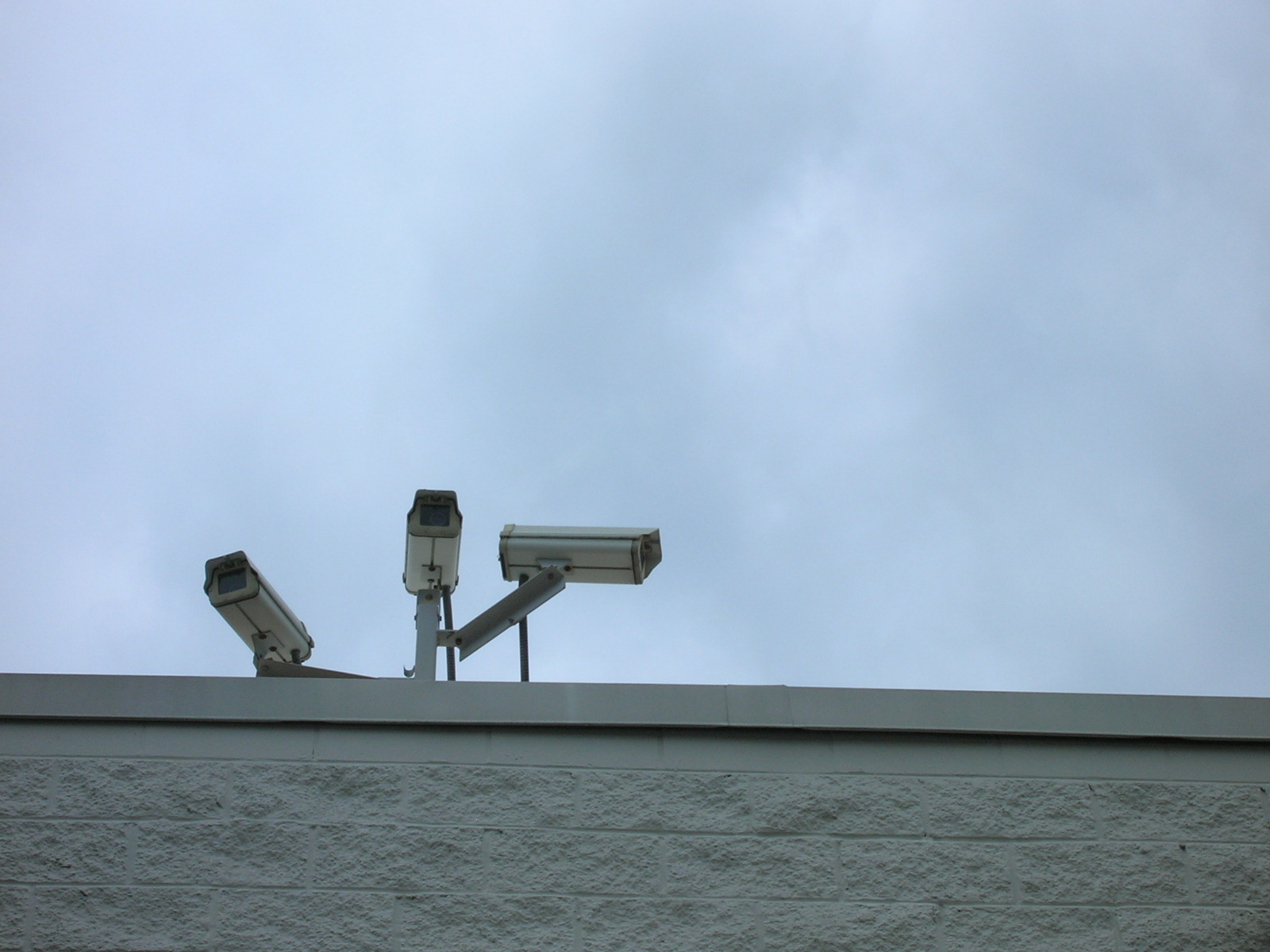
Security cameras on a building roof. Photograph: Fourhazzy, CC0. Illustrative photo; not a design or code-compliance example.
A camera, a card reader and a smoke detector can appear on the same electrical drawing. They serve different purposes, connect to different equipment and need different checks before handover. Counting the devices is only the start of pricing the work.
Division 28 — Electronic Safety and Security — groups work associated with electronic security and detection and alarm systems. NRC’s National Master Specification (NMS) includes access control, video surveillance, intrusion detection and fire detection and alarm subjects within this division. [1][2]
This guide explains the main systems and the questions an electrical estimator should ask. It is an overview, not a complete MasterFormat section list or a system design. Use the project’s specification index, drawings, schedules and tender instructions to establish the actual scope.
1. Start with what each system must do
Separate three functions when reviewing the documents:
- Control access: decide who may enter and operate the specified door or entrance equipment.
- Monitor security: observe an area or detect a condition that needs a security response.
- Detect and communicate a life-safety event: detect the specified hazard, notify occupants and initiate the designed responses.
These functions can be connected, but they are not interchangeable. A security camera does not replace a fire detector. A card reader does not, by itself, provide a complete controlled doorway.
For each system, follow the same practical chain: device → cabling and power → control equipment → required action → testing and handover. Check every part of that chain before accepting a supplier’s device price as a complete system price.
2. Recognise the main work groups
| System or work group | What it does | What to establish before pricing |
|---|---|---|
| Access control and entrance control | Manages entry through specified doors or entrances. | Readers, controllers, credentials, locking equipment, door preparation, power and programmed operation. |
| Security door supervision | Monitors door conditions for the specified security functions. | Door contacts, monitored conditions, control-panel connections and alarm indications. |
| Video surveillance | Captures, displays and, where specified, records images. | Cameras, mounts, network connections, power, recording equipment, storage, licences and setup. |
| Intrusion detection | Detects specified conditions associated with an intrusion and initiates the required security indication or response. | Detection devices, control equipment, alarm zones, communications, monitoring and testing. |
| Fire detection and alarm | Detects or receives fire-related inputs and provides the designed alarm signals and outputs. | Initiating devices, notification devices, panels, annunciators, connections, programming and verification. |
| Single- and multiple-station alarms | Provides the specified local alarm functions, which may include smoke or carbon-monoxide alarms. | Device type, power source, interconnection and whether the work is separate from a building fire-alarm system. |
These are educational groups, not a replacement specification. NRC’s public NMS descriptions and index confirm these subjects, and the entries have different update dates. Read the title and requirements as well as the number; do not relabel a tender using a remembered numbering scheme. [1][2]
Specialist facilities may have additional detection, duress, perimeter-security or other systems. Identify them from the project documents rather than assuming this overview covers every installation.
3. Review a controlled door as a complete assembly
A drawing symbol for one reader can conceal work assigned to several packages. Check the door schedule, hardware schedule, security drawings and operating sequence together.
Establish who supplies, installs, connects and tests:
- The reader, door controller and any specified devices that request an exit or monitor whether the door is open or closed.
- The electric locking equipment, power transfer components and door/frame preparation.
- Power supplies, required backup power, cabling, pathways and termination hardware.
- Credentials, software licences, access permissions and operating schedules.
- Any connection to fire-alarm or other building systems required by the design.
Confirm the required door behaviour during normal use, loss of power and a fire-alarm condition with the designer and responsible specialists. Do not assume every electric lock must behave in the same way. The approved arrangement and applicable requirements determine the response.
The estimating task is to include the specified arrangement and its coordination work. A note saying “door hardware by others” is incomplete unless the estimate identifies which package carries each part and who connects it.
4. Include the equipment behind the cameras and detectors
For surveillance, separate the camera installation from the recording and management system. A camera quotation may exclude network switches, recording equipment, storage, software licences, displays or configuration.
Resolve who provides the network connection and power for each device, including Power over Ethernet where specified. Confirm the required recording performance and retention period before accepting a storage allowance. Do not assume every project needs the same number of days of recording.
For intrusion detection, identify the detection areas, devices, control equipment and required alarm reporting. Establish whether the price includes a connection to a monitoring service, initial activation, demonstrations and any specified certification. Separate one-time installation costs from recurring service charges and include each only as the tender requires.
UL Solutions in Canada describes intrusion-alarm installation and monitoring, and fire/sprinkler monitoring, as distinct program subjects. [3] A fire-alarm installation quotation should therefore be checked for its monitoring provisions rather than assumed to include an operating off-site service.
5. Treat fire-alarm completion work separately
A fire-alarm system can include initiating devices, such as specified detectors and manual stations; audible and visible notification devices; control equipment; and connections to other building systems. An annunciator displays system information at a designated location. Some designs also include fire-alarm voice communication. The required arrangement comes from the design; this article does not prescribe device locations, spacing, circuit selection or standby-power capacity.
When comparing quotations, distinguish the work being offered:
| Completion activity | What to clarify in the estimate |
|---|---|
| Installation and initial setup | Who installs, terminates, programs and checks the specified system? |
| Fire-alarm verification | Who performs the required verification, prepares the records and returns to address deficiencies? |
| Inspection and testing in service | Is any post-handover service period included, and who pays for it? |
| Integrated systems testing | Who plans, coordinates, attends and documents the testing of required connections between systems? |
UL Solutions distinguishes verification under CAN/ULC-S537 from inspection and testing under CAN/ULC-S536. Its Canadian program guidance also identifies integrated testing separately. [3] The integrated-testing standard addresses whether interconnections serving fire-protection and life-safety functions operate in accordance with their design criteria. [4]
For example, a design may require a fire-alarm event to release specified door equipment or initiate a mechanical response. Include the required modules, wiring, programming and participation by the affected trades. Check the test plan and contract requirements before deciding which quotation carries that work.
Confirm the applicable code and referenced standard editions for the project’s jurisdiction and permit circumstances. NRC explains that national model codes must be adopted by the relevant authority to take effect. [5] A newly published code or standard is not, by itself, proof of what governs a particular project.
6. Coordinate Divisions 08, 26, 27 and 28
Responsibility often crosses specification divisions. As an estimating check, look for door and hardware work in Division 08, power and electrical provisions in Division 26, communications infrastructure in Division 27, and security or alarm equipment in Division 28. The actual contract allocation may differ.
For every connection, answer four questions:
- What equipment is being connected, and what must the connection achieve?
- Who supplies and installs the cable, pathway, power and interface components?
- Who configures each end and confirms compatibility?
- Who tests the completed operation and provides the record?
Illustrative example: an office renovation shows six controlled doors and eight network cameras. The security quotation includes readers, controllers and cameras, but excludes electric locks, cable pathways, network switches and integrated testing.
Do not carry that quotation as a complete Division 28 price. Compare each exclusion with the hardware, electrical, communications and testing packages. Carry each required item once. If responsibility or the design is unclear, raise a clarification and record the authorised estimating decision before finalising the price.
The example is a scope-review exercise, not a design or device-sizing rule.
7. Include privacy, secure setup and handover
Surveillance requirements affect more than the camera count. The Office of the Privacy Commissioner of Canada’s overt-surveillance guidance addresses purpose, viewing range, notice, access to recordings and retention. Its stated scope is private-sector surveillance of the public in publicly accessible areas; it is not a universal rulebook for employee, covert or public-sector surveillance. [6]
Ask the owner or designer to specify the required camera coverage, privacy settings, signs, access permissions and retention arrangements. Include the resulting work in the appropriate package. Do not invent a retention period or enable audio recording simply because the equipment offers that feature.
For connected equipment, include the specified secure configuration and coordination with the owner’s IT team. The Canadian Centre for Cyber Security recommends changing default passwords, keeping devices updated and using additional authentication where supported in its workplace IoT guidance. [7] Confirm who performs this work and how administrative access will be handed over securely.
Before closing the estimate, check for operating demonstrations, training, as-built drawings, device identification, configuration records, test reports, warranties and any specified service agreements. Establish who supplies each deliverable and allow for the required time.
8. Price the completed function
A sound Division 28 estimate follows each system from its field devices to its required operation. It includes the supporting power and communications, identifies work assigned to other packages, and accounts for configuration, testing and handover.
The final question is practical: does the price cover what is needed for the specified system to work and be accepted, or only the devices shown on the drawing?
References
Sources checked 27 October 2026. The references support this educational overview; project-specific design, regulatory and acceptance requirements still need to be confirmed.
- National Research Council Canada, NMS documents’ descriptions, Division 28 entries. Public descriptions only; restricted full specification sections were not accessed.
- National Research Council Canada, NMS table of contents: 2026-04 update, Division 28. Section update dates vary; use the project’s actual specification index.
- UL Solutions in Canada, Fire and Security Alarm Certificate Programs. Program guidance; not evidence that every project requires a ULC certificate or the editions mentioned on that page.
- UL Standards & Engagement, Standard for Integrated Systems Testing of Fire Protection and Life Safety Systems, public scope. Publication and code adoption are separate matters.
- National Research Council Canada, Codes Canada — frequently asked questions, application and adoption explanation. No province-by-province edition table is relied on here.
- Office of the Privacy Commissioner of Canada, Guidelines for Overt Video Surveillance in the Private Sector, March 2008. Read within its stated scope and applicable current privacy requirements.
- Canadian Centre for Cyber Security, Internet of Things (IoT) Security — ITSAP.00.012, workplace security considerations.
General estimating workflow guidance. Project requirements and contractual documents take precedence; this is not electrical design or code-compliance advice.