Electrical Systems & Specifications
MasterFormat Divisions 26, 27 and 28: A Guide for Electrical Estimators
Understand MasterFormat Divisions 26, 27 and 28, their typical systems and the scope checks that prevent gaps and duplicate pricing.
8 min read
Understand where power, communications and electronic safety systems are described, then check who supplies, installs and tests each required part of the work.
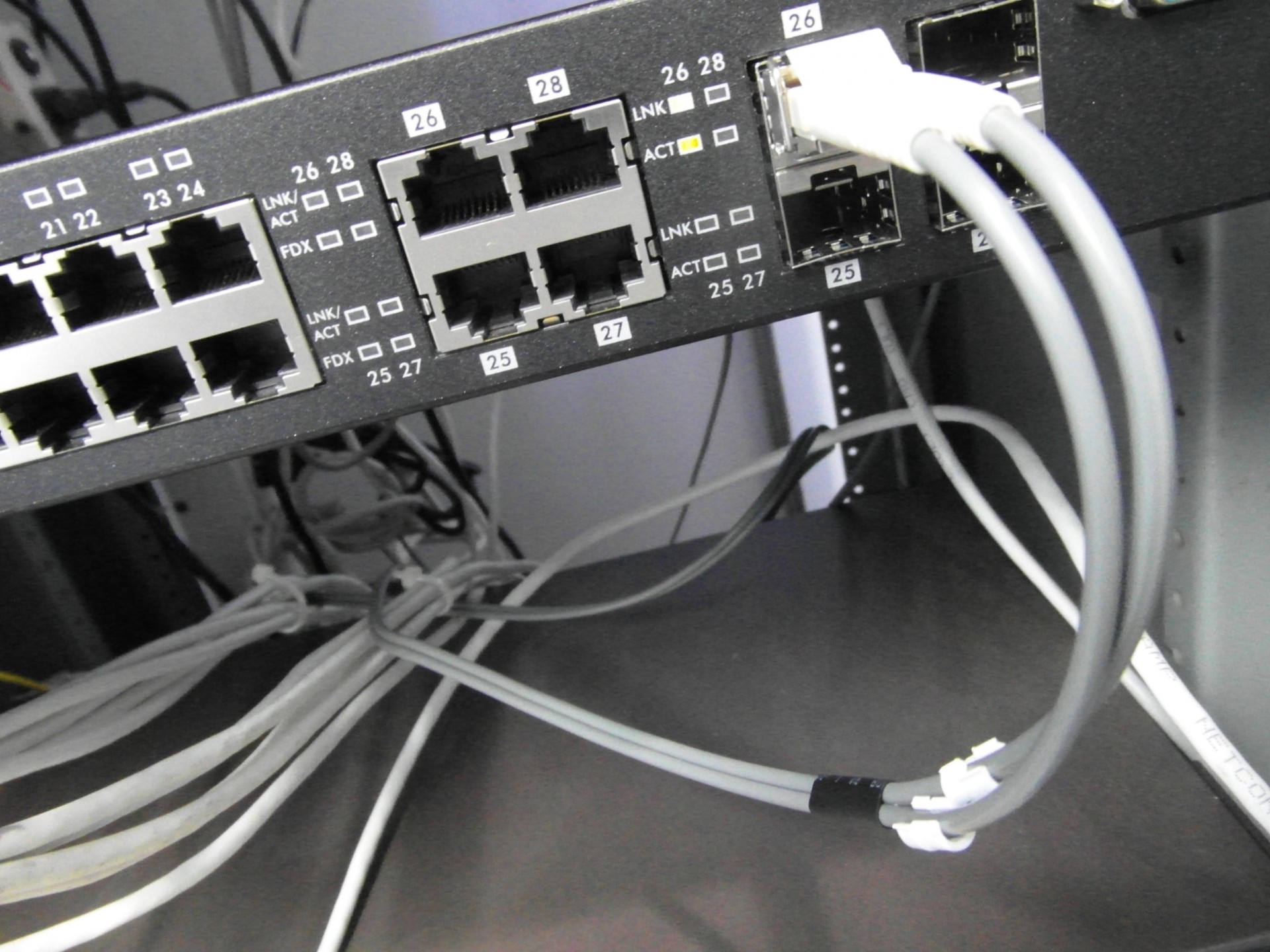
Communications equipment. Photo: Ian L / PublicDomainPictures.net, CC0. Port labels are not MasterFormat section numbers.
An electrical tender may include lighting, data cabling, card readers and fire alarm devices. These items can appear on related drawings and be priced in one electrical package, but they do not all belong to Division 26.
Division 26 is Electrical, Division 27 is Communications, and Division 28 is Electronic Safety and Security. They are separate divisions. Divisions 27 and 28 are not subdivisions of Division 26.
Knowing the headings helps you find requirements. It does not establish the full scope of your quotation or decide which contractor performs the work.
1. Understand what MasterFormat organises
MasterFormat is a classification system developed and maintained by the Construction Specifications Institute (CSI) and Construction Specifications Canada (CSC). It organises construction information by work results and is used to organise specifications and detailed cost information. [1, 2]
A division is a broad grouping. A specification section gives more specific requirements within the project manual. For example, the Canadian National Master Specification (NMS) lists 26 24 13 — Switchboards. The first pair, 26, identifies the division; read the complete section number and title to identify the subject. [3]
Read the section itself, not just its heading. Then check its related drawings, schedules and references to other sections.
CSI’s explanation makes an important distinction: MasterFormat does not define trade jurisdictions. [2] A project can place work from several divisions in one tender package, or divide work among different contractors and owner-appointed specialists. Establish your pricing responsibility from the actual tender and contract documents.
2. Recognise the main subjects in each division
The following is a practical overview of representative subjects. It is not a complete MasterFormat directory or a substitute for the project’s specification index. The Canadian NMS and UBC’s published technical guidelines provide examples of this organisation. [3, 4]
| Division | Representative systems and work to look for |
|---|---|
| 26 — Electrical | Electrical distribution; transformers, switchgear and panelboards; power wiring and raceways; grounding; wiring devices; motor controls; generator and UPS equipment; lighting and lighting controls. |
| 27 — Communications | Communications pathways and bonding; structured copper and fibre cabling; voice/data infrastructure; communications equipment; public address, intercom, nurse-call and clock systems where specified. |
| 28 — Electronic Safety and Security | Access control; intrusion detection; video surveillance; fire detection and alarm. |
Division 26: follow the power and lighting requirements
Start with the service and distribution drawings, equipment schedules, panel schedules and lighting information. Match those items to the relevant specifications. Check the associated installation requirements rather than pricing equipment alone.
For an estimator, the important question is what the complete item includes. A panelboard price may need separate allowances for its feeder, connections, supports, identification and required testing. Check which of these are included in a supplier or subcontract quotation before adding them again.
An electrically powered device can belong to a system described in another division. Its power connection still needs to be identified and assigned in the estimate. Do not assume that the equipment supplier includes the branch circuit simply because the equipment needs electricity.
Division 27: separate the communications system from its supporting work
Read the communications drawings together with the room layouts, outlet information and specifications. Identify the required cabling, terminations, equipment, labelling and test records, then establish who provides each item.
Do not treat a cable count as a complete communications price. A quotation may cover cable installation while excluding pathways, terminations, testing or active equipment. Equally, an owner’s equipment purchase does not tell you who installs its supporting infrastructure.
UBC’s communications guidelines, for example, identify communications rooms, pathways, bonding, copper/fibre testing and wireless access points as separate topics. [4] Those are useful review prompts; UBC’s particular requirements are not automatically requirements for another project.
Division 28: check the complete safety or security system
The Canadian NMS places fire detection and alarm alongside security-related subjects in Division 28. [3] Do not move fire alarm into Division 26 merely because an electrical contractor is pricing it.
Follow the specified system through its devices, cabling, connections and required completion activities. Identify who supplies and installs equipment, who programs it and who performs the specified tests, verification or commissioning. Use the project’s actual terminology and requirements; these activities should not be treated as interchangeable.
Do not assume a security quotation also covers fire alarm. Compare its listed systems and exclusions with the tender documents before carrying its total into the estimate.
3. Review work that connects the divisions
A division heading tells you where information is organised. It does not guarantee that every part of a working system is covered by the quotation you received.
For each system, ask:
- Who supplies the equipment and any owner-supplied components?
- Who installs pathways, boxes, supports and cables?
- Who provides the power connection and required bonding?
- Who terminates, configures or programs the equipment?
- Who provides the specified testing, records, training and closeout information?
Record the source of each answer. If the documents leave a responsibility unclear, keep the question visible and use the tender’s clarification process. Resolve it or obtain an authorised estimating decision consistent with the tender instructions before finalising the price.
Do not use “low voltage” as a substitute for a defined scope. A quote described that way may include only selected communications or security work. Write down the actual systems and tasks covered.
Example: one camera installation, several responsibilities
Assume a fictional renovation includes a network-connected security camera. The tender describes the camera system in Division 28, refers to a Division 27 network connection and shows a power connection for the supporting network equipment. This is an estimating example, not a camera design or a universal allocation of work.
| Part of the example | Question to resolve before pricing |
|---|---|
| Camera and mounting arrangement | Who supplies and installs them, and what accessories are included? |
| Cable route and pathway | Who provides the cable, conduit or other pathway, boxes and supports? |
| Network connection | Who provides the required network equipment, port and configuration? |
| Power for supporting equipment | Is the specified power connection included in the electrical price or another package? |
| System setup and completion | Who configures the camera, demonstrates operation and provides the specified records? |
Do not assume every camera requires a separate local power circuit; follow the specified power arrangement. Likewise, do not assume that a network-cabling quote includes the camera or the equipment that operates it.
Suppose the camera specialist excludes both the network cable and the pathway. Identify where those costs are carried. If another quote includes both, check that you have not also priced the same work in your own takeoff.
The goal is one complete, traceable allowance for each required part—not three division totals that leave a gap or count the same installation twice.
4. Look beyond Divisions 26, 27 and 28
Check the project-wide requirements as well as the electrical-related sections. The Canadian NMS also identifies Division 00 for procurement and contracting requirements, Division 01 for general requirements, Division 25 for integrated automation and Division 33 for utilities. [3]
Review whichever of these the project uses and any other section referenced by the work you are pricing. For example, an access-controlled door may require coordination with door hardware; a building-controls package may refer to electrical power and communications requirements.
A reference to another section is a reason to read it and establish responsibility. It is not, by itself, proof that all work in that section belongs in your quotation.
5. Use the project’s edition and section numbering
CSI identifies MasterFormat 2026 as a revised edition, with changes that include Divisions 26 and 28. [1] Do not silently replace a tender’s section numbers with numbers from a different edition or an old company checklist.
The NMS and an owner’s specifications are practical reference sources, not proof that every project uses identical section numbers or wording. Record the project’s actual section number, title and revision beside the work being priced. When an addendum changes the requirement, update the takeoff, quotations and estimate together.
Before finalising the electrical package
Check that your price covers the required work across all relevant divisions, that supplier and subcontract quotations match the specified systems, and that unresolved responsibilities have recorded decisions.
Keep the distinction clear: the division organises information; the project documents establish what you must price. Use MasterFormat to find and organise the work, then check the complete system and the responsibilities needed to deliver it.
References
- CSI: MasterFormat 2026. Joint CSI/CSC development and the edition’s revision overview; not a full section-by-section classification reference.
- The Construction Specifier: Using CSI formats effectively, Michael D. Chambers, 1 June 2013, “MasterFormat.” Explanation of work-result organisation, detailed cost information and the distinction from trade jurisdictions.
- National Research Council Canada: NMS table of contents, 2026-04. Canadian examples of division headings and subjects. NMS listings are not represented here as a complete reproduction of MasterFormat 2026.
- UBC Technical Guidelines: Guidelines by Specification Division, Divisions 26–28 and the linked Division 27 communications guidance. Owner-specific examples, not requirements for unrelated projects.
References checked 22 October 2026. This is an original educational overview, not a complete classification list, trade-jurisdiction ruling or electrical design guide. The camera example is fictional. MasterFormat is a registered trademark of CSI.
Photo credit
“Server Network Cables” by Ian L, PublicDomainPictures.net. Released under CC0 1.0 Public Domain Dedication. Photograph used unchanged. It illustrates communications equipment; it is not a drawing of the fictional camera installation.
General estimating workflow guidance. Project requirements and contractual documents take precedence; this is not electrical design or code-compliance advice.