Electrical Systems & Specifications
The Systems Within MasterFormat Divisions 26, 27 and 28
Explore electrical, communications, safety and security systems, their typical components and the scope checks needed for a complete estimate.
14 min read
Understand what the systems do, recognise their main components and check the work needed to deliver a complete installation.

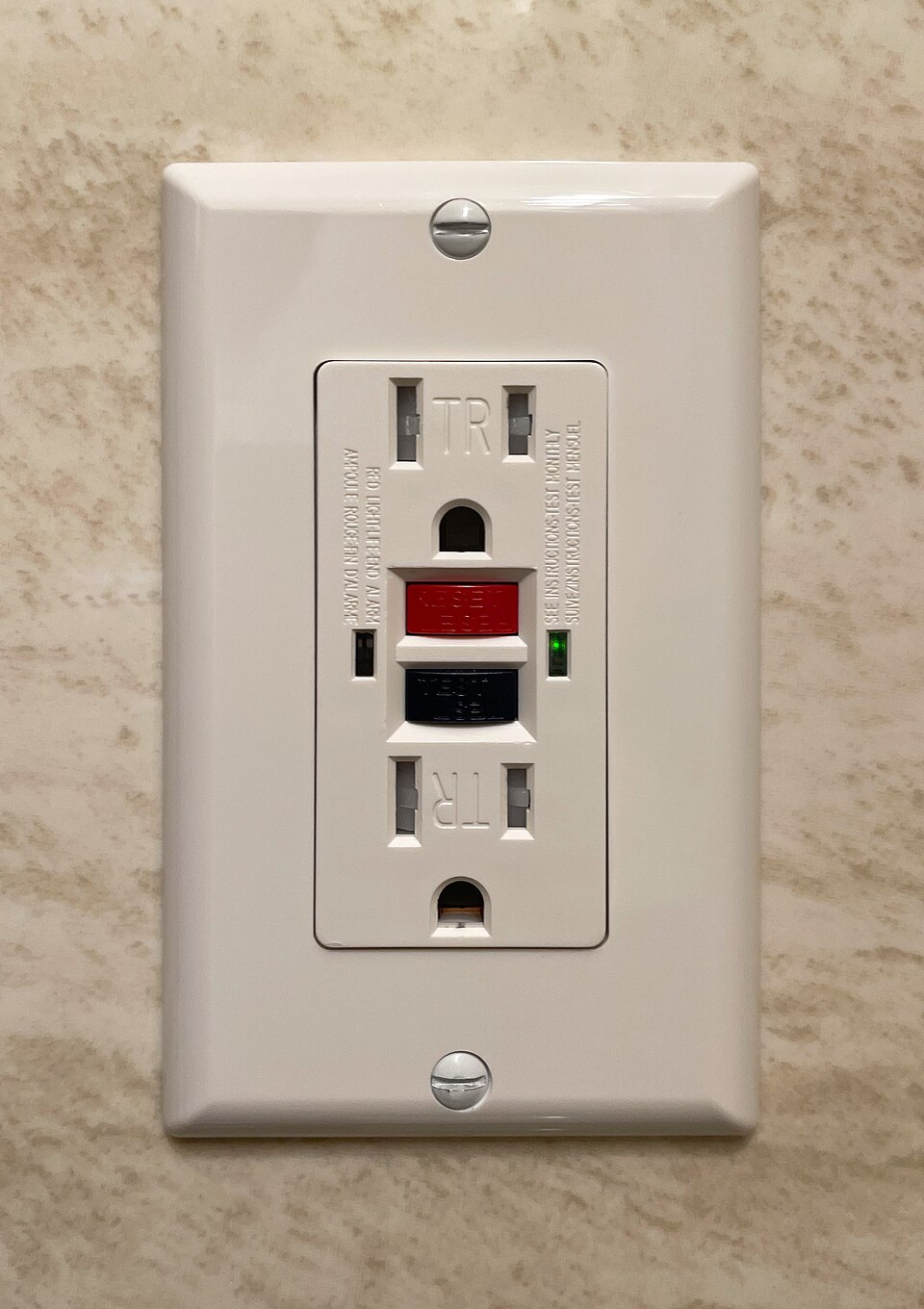
An electrical test panel illustrates switching components. Photograph: Martin Birkin, CC0. This image is illustrative and does not show all three divisions or a project design.
An electrical estimate can involve much more than distribution equipment, lighting and receptacles. A project may also require data networks, audiovisual equipment, patient calls, access control and several types of detection and alarm.
MasterFormat helps organise that information. Division 26 covers Electrical, Division 27 covers Communications, and Division 28 covers Electronic Safety and Security. These are separate divisions, even when one contractor prices work from all three.
This guide expands the division overview into a practical explanation of the system families. The tables group related subjects for readability; their row labels are explanatory, not official specification-section titles. Start with the project's specification index and follow its drawings and cross-references. A division heading alone does not assign a contractor's scope.
1. Read the system, not just the division number
Think of a system as the equipment and supporting work needed to perform a defined function. A communications outlet, for example, needs more than a wall plate. The specified installation may include cable, connectors, a route to the communications room, labelling and test records.
For each system, establish three things:
- Purpose: what must the completed installation do?
- Components: which equipment, cables, pathways and connections are specified?
- Responsibility: who supplies, installs, configures, tests and hands over each part?
The classification review uses CSI's publicly available MasterFormat 2016 listing and Canadian specification references. CSI now identifies a 2026 edition, including changes to Divisions 26 and 28. This is a system-family guide, not an exhaustive catalogue of every current MasterFormat section. Use the project's adopted edition for exact numbers and titles. [1–3]
2. Division 26 — Electrical
Division 26 includes the infrastructure that distributes electrical power, the equipment that uses or manages that power, and lighting. It also includes supporting installation and completion requirements. The Canadian NMS provides examples across these subjects. [2]
Bring power into the building and distribute it
| System or work group | What it does or contains | What the estimator should check |
|---|---|---|
| Incoming service and medium-voltage distribution | The incoming supply arrangement may involve substations, transformers, switching, protection and metering before power reaches downstream equipment. | Establish the utility's supply boundary. Check who provides equipment, ducts, civil work, terminations and the scheduled connection. |
| Building distribution | Transformers, switchgear, switchboards, panelboards and busway distribute power to the building's loads. These equipment types have different functions and construction; their names are not interchangeable. [4] | Match each item to the single-line diagram, schedule and specification. Check ratings, accessories, delivery, assembly and installation requirements. |
| Feeders and branch circuits | Conductors and cables connect distribution equipment to other equipment, lighting and receptacles. | Trace each route and termination. Include the specified conductor arrangement and supporting work rather than measuring only a line on a plan. |
| Wiring devices and equipment connections | Receptacles, switches, connection points and local disconnection arrangements complete the connection to loads. | Reconcile device counts with room layouts and equipment schedules. Identify connections to equipment supplied by another contractor or the owner. |
| Motor power and control | Starters, motor-control centres and variable-frequency drives are examples of equipment associated with supplying and controlling motors. | Separate the motor, controller, disconnect, power wiring and control wiring. Confirm the responsibility for each against the mechanical and electrical documents. |
Eaton's explanation of distribution equipment distinguishes the equipment assemblies and the way power passes to downstream loads. [4] For estimating, that means a supplier's equipment total is not automatically a complete installed distribution price. Check the feeders, supports, connections and specified completion work separately.
Generate, store, transfer and improve power
| System or work group | What it does or contains | What the estimator should check |
|---|---|---|
| Local generation | A facility may have a generator or a renewable-energy installation. The classification framework includes facility-scale generation subjects, but a project may also use other divisions for generation work. [1] | Read the actual package boundaries. Check electrical connections alongside fuel, exhaust, ventilation, structural and utility-interface responsibilities where applicable. |
| Battery and UPS installations | Batteries store energy. An uninterruptible power supply (UPS) supports connected equipment when its normal supply is interrupted; its arrangement and runtime depend on the specified equipment. [5] | Check batteries, racks or cabinets, bypass arrangements, monitoring, delivery and start-up. Do not substitute a generator allowance for a specified UPS. |
| Transfer equipment | Transfer switches connect loads to an alternative supply arrangement. Eaton describes arrangements involving utility and generator sources, among others. [6] | Match the specified transfer arrangement, controls and connections. Check whether the quoted package includes all required accessories and attendance. |
| Power-quality equipment | Filters, power-factor-correction equipment and voltage-conditioning equipment address particular supply or load characteristics. [1, 7] | Carry the equipment actually specified. Identify the study, installation, control and testing allowances instead of adding a general percentage for “power quality.” |
A generator, UPS and transfer switch perform different jobs. They can form parts of one coordinated installation, but pricing one does not cover the others.
Protect the installation and provide lighting
| System or work group | What it does or contains | What the estimator should check |
|---|---|---|
| Grounding and bonding | Grounding connects the specified system to earth. Bonding connects conductive equipment parts to the specified bonding path. Their detailed arrangement follows the project design. [13] | Follow the project details through equipment and pathways. Check that quotation exclusions do not leave these connections unpriced. |
| Lightning and surge protection | Lightning-protection installations and surge-protective equipment are distinct subjects within the electrical work. [1] | Identify which installation is required, its connections and the specialist's scope. Do not treat the two descriptions as an interchangeable allowance. |
| General and exterior lighting | Luminaires, mounting arrangements and their associated wiring provide the specified lighting installation. | Reconcile fixture types and quantities with the schedule. Include poles, brackets, supports and exterior-work boundaries where shown. |
| Emergency and exit lighting | The specified installation can include exit signs, emergency luminaires and associated supply equipment. | Check whether batteries are local or central and which circuits and tests are specified. Do not assume a standard kit suits every fixture. |
| Special lighting and lighting controls | Specialist applications can include performance, sports or classified-location lighting. Controls may involve sensors, dimming, relays, panels and programming. [1, 2] | Check the actual fixture and control schedule. Identify who supplies controls, wires them, programs them and demonstrates operation. |
Include the work that supports every system
Raceways, boxes, cable tray, supports, identification and specified seismic restraints may support several systems. Selective demolition, temporary arrangements, electrical studies, testing, commissioning and maintenance work can also appear in the electrical requirements. [1, 2]
Keep these tasks visible in the estimate. If a system price already includes its pathways, do not add them a second time under a separate heading. If it excludes them, identify where they are carried.
3. Division 27 — Communications
Division 27 extends beyond data cable. It includes infrastructure, active communications equipment and several systems that carry speech, images, information or calls. The family structure is broader than the cabling scope on a typical small project. [1]
Build the infrastructure and connect the network
| System or work group | What it does or contains | What the estimator should check |
|---|---|---|
| Communications rooms and pathways | Racks, cabinets, cable management, pathways and bonding support the communications installation. | Distinguish room fit-out from cable installation. Check backing, rack assembly, power, bonding, supports and penetrations against the assigned scopes. |
| Structured cabling | Copper and optical-fibre cabling, termination hardware, patching and outlets form the physical connections. Backbone and horizontal cabling describe different parts of that infrastructure. | Measure the specified routes and count both ends of each connection. Check termination, identification, testing and records. |
| Active data equipment | Switches, routing equipment and wireless equipment provide network functions beyond the passive cable installation. | Establish what the owner supplies. Confirm equipment installation, network configuration, licences and connection responsibilities where required. |
| Data software and integration | The classification framework also accommodates software, computing equipment and integration services; these are not necessarily part of the electrical contractor's package. [1] | Read the procurement boundaries. Do not price only cabling when software work is assigned, or include an owner's IT purchase without a requirement. |
A useful Canadian example is Université de Sherbrooke's structured-cabling standard. It addresses copper and fibre work, racks, patching components, grounding, identification and documentation. [8] It illustrates why “data cabling included” is not a sufficiently detailed quotation description. Its particular products and accreditation requirements apply to that owner's work, not automatically to other projects.
Provide voice, pictures and information
| System or work group | What it does or contains | What the estimator should check |
|---|---|---|
| Telephone and voice services | Telephone equipment, voice switching, messaging, radio communications and dedicated call arrangements can form part of the specified communications scope. | Identify equipment, service activation, configuration and specialist attendance. Distinguish a cable outlet from an operational telephone connection. |
| Audiovisual installations | Displays, projection, sound, conferencing and room-control equipment support presentations and communication. | Coordinate the equipment quotation with power, data, pathways, mounting and programming. A display purchase alone is not the complete installation. |
| Television and electronic information | Distributed television, public-information displays and other electronic information applications may be specified. [1] | Check signal sources, distribution, displays, mounting and the responsibility for content or configuration. |
UBC's audiovisual infrastructure guidance explicitly coordinates power, data, pathways and architectural provisions. [9] Use that as an example of the coordination needed, while following the requirements of the project being estimated.
Distribute messages, calls and monitoring information
| System or work group | What it does or contains | What the estimator should check |
|---|---|---|
| Paging, public address and intercom | These installations distribute announcements or allow communication between locations. | Count the specified devices and zones. Check head-end equipment, cabling, power and configuration rather than carrying a speaker-only price. |
| Sound masking and assistive listening | Sound masking adds a controlled audio background for speech privacy. Assistive listening delivers sound to suitable receivers or hearing devices to improve access to speech or other audio. [14, 15] | Confirm the specified coverage, equipment and specialist setup. Keep their quotations separate enough to compare the actual scope. |
| Healthcare communications | Nurse call and code-blue arrangements support calls for assistance. The broader family also includes patient monitoring, telemedicine and imaging-related communications. [1, 10] | Separate clinical equipment from the infrastructure assigned to the contractor. Check room devices, indication, interfaces, configuration and training. |
| Clocks, tracking and in-building wireless | Distributed installations can include synchronised clocks, tracking applications and internal cellular or antenna infrastructure. [1] | Identify the complete specified system and specialist. Do not assume all wireless equipment belongs to the same quotation. |
| Emergency communications | A project may describe emergency communication requirements within its communications sections or cross-reference a safety system. | Follow the specified function, section and interfaces. Do not assume ordinary paging meets the requirements of an emergency installation. |
Some technologies appear in more than one division context. An intercom used for general communication and an entry intercom integrated with access control may be specified differently. Classify and price the required function using the actual documents.
4. Division 28 — Electronic Safety and Security
Division 28 includes more than cameras and card readers. Its subjects extend to detection, alarms, monitoring, life-safety installations and specialist security applications. [1, 2]
Control access, observe activity and detect events
| System or work group | What it does or contains | What the estimator should check |
|---|---|---|
| Access and identity management | Controllers, readers, credentials, entry devices and software manage access. Visitor, vehicle and key-management applications may also be required. [11] | Coordinate doors, hardware, power, cabling, software and configuration. Identify who provides each part of an operational controlled entrance. |
| Video surveillance | Cameras, recording, storage, viewing and video-management functions form the surveillance installation. [11] | Check mounts, network connections, storage, licences, configuration and required demonstrations. Do not use camera quantity as the whole scope. |
| Intrusion and perimeter detection | Sensors and control arrangements identify specified intrusion events and report alarms. [11] | Check device coverage, connections, alarm reporting and integration. Identify specialist testing and the responsibility for monitoring services. |
| Security monitoring, tracking and audio | A project can require an operator's monitoring arrangement, asset or personnel tracking, or audio monitoring. [1] | Read the required operating function and equipment schedule. Establish responsibility for consoles, interfaces and ongoing services separately from installation. |
Canadian manufacturer Genetec describes a unified platform combining video, access control, intrusion and communications. [11] Integration can bring systems together for the operator; it does not remove the need to price their individual components and configuration.
Detect hazards and communicate emergencies
| System or work group | What it does or contains | What the estimator should check |
|---|---|---|
| Fire detection and alarm | Initiating devices, control equipment, notification appliances and interfaces form the specified installation. | Read the complete sequence and device schedules. Identify supply, installation, programming and the specified testing, verification and commissioning responsibilities. |
| Other hazard detection | The classification framework includes radiation, gas, fuel-oil, refrigerant and water detection and alarm subjects. [1] | Identify the actual hazard and specified specialist. Check sensors, controllers, alarm outputs and connections to other equipment. Do not treat all detection as fire alarm. |
| Mass notification | Coordinated messaging can communicate emergency information through the specified notification methods. [12] | Check the required delivery methods, controls, interfaces and demonstrations. Do not assume a public-address quotation includes the emergency requirements. |
| Emergency response and personal protection | The framework includes response-system and electronic personal-safety subjects, including requests for assistance. [1] | Identify the operator or monitoring destination and the complete reporting path. Confirm setup, demonstration and handover responsibilities. |
A fire-alarm interface to a sprinkler system does not make the sprinkler installation part of the fire-alarm quotation. Likewise, an interface to ventilation, door hardware or an elevator requires a clear allocation of the connection and testing work.
Include the specialist platform and supporting infrastructure
Safety and security installations can require their own power supplies, backup arrangements, servers, storage, networks and cybersecurity requirements. Specialist projects may also include integrated information displays, control rooms or detention-security installations. [1]
Check whether these components are dedicated to the security package, supplied by the owner or shared with another installation. Record licences, subscriptions, interfaces and attendance where specified. Keep ongoing service costs distinct from one-time installation costs.
5. Example: an entrance with several connected systems
Assume a fictional renovation includes an entrance with lighting, a card reader, an entry intercom and a camera. The owner supplies the network switch, while contractors provide the specified field installations.
| Part to review | Question that prevents a pricing gap |
|---|---|
| Lighting and power | Have the required circuits, controls and equipment connections been measured? |
| Network connection | Who provides, terminates and tests the cable, and who configures the owner-supplied switch? |
| Door and entry equipment | Who supplies the lock, reader, intercom, controller and their connections? |
| Camera | Does the specialist include its mount, recording connection and required setup? |
| Operation and handover | Who demonstrates the coordinated operation and supplies the specified records? |
Do not assign the whole entrance to one division and assume the other work is included. Record each required task once and reconcile the separate quotations. If responsibility is unclear, request clarification through the tender process before finalising the price.
Before finalising the estimate
Work through the project's actual specification index, mark the applicable systems and trace each one from equipment to completed operation. Reconcile quotation exclusions with your own takeoff. Include the specified supporting work and completion activities without counting them twice.
The useful outcome is a complete, understandable estimate—not merely a list of division totals.
References
-
CSI/CSC: MasterFormat 2016 Numbers and Titles, printed pages 96–112. Historical source for the breadth of system families, not verification of every current section number.
-
National Research Council Canada: NMS table of contents, 2026-04. Canadian specification examples; NMS is not an exhaustive MasterFormat directory.
-
CSI: MasterFormat 2026. Current-edition revision overview.
-
Eaton: Panelboards, switchboards and switchgear. Distribution-equipment explanation.
-
Eaton: Uninterruptible power supply FAQ. UPS purpose and arrangements.
-
Eaton Canada: Automatic transfer switch fundamentals. Source-transfer functions.
-
Eaton: AutoVAR filter. Example of power-factor-correction and filtering equipment, not a product recommendation.
-
Université de Sherbrooke: Structured telecommunications cabling, 13 May 2025. Owner-specific Canadian example, in French.
-
UBC: Audio-Video Infrastructure, November 2025. Owner-specific coordination example.
-
Honeywell: Call systems. Nurse-call application examples.
-
Genetec: About Security Center. Example of coordinated security functions, not a product recommendation.
-
Honeywell: Mass notification systems. Emergency messaging and integration example.
-
Technical Safety BC: Understanding Single Point Grounding. Canadian grounding and bonding terminology; no wiring arrangement prescribed here.
-
Biamp: What is sound masking?. Sound-masking purpose.
-
RNID: Assistive listening systems in public venues. Listening-system examples.
Sources checked 22 October 2026. System groupings are educational and include specialist applications that will not occur on every project. The complete licensed MasterFormat 2026 listing was not available for this review; this article does not claim section-by-section completeness against that edition. Project documents govern scope. This guide does not determine code requirements, equipment sizing or design. MasterFormat is a registered trademark of CSI.
Photo credit
“Switch Panel Front (2)” by Martin Birkin / PublicDomainPictures.net, released under CC0 1.0. Used unchanged.
General estimating workflow guidance. Project requirements and contractual documents take precedence; this is not electrical design or code-compliance advice.